
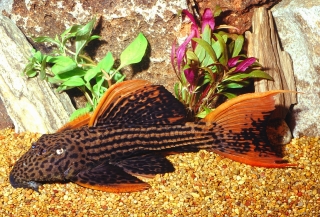
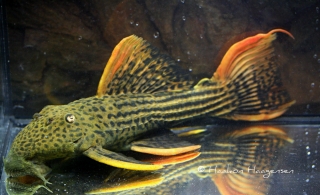
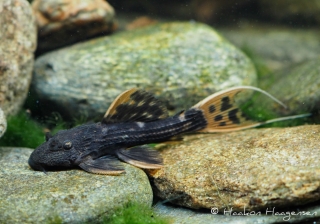
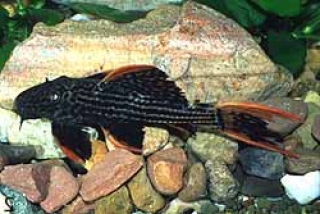
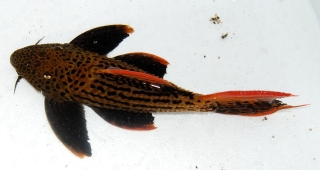
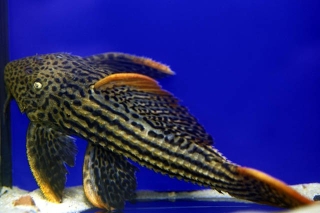
 Dorsal view of female
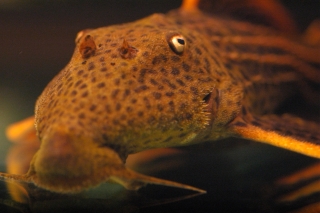 Female - close-up of head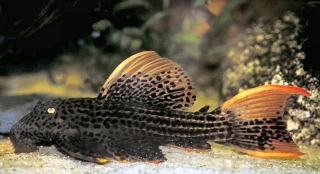
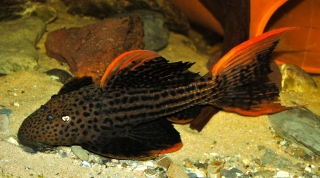
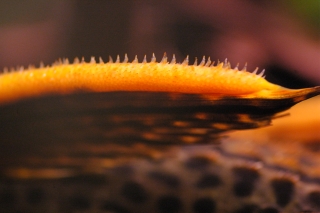 Female - close-up of pectoral odontodes
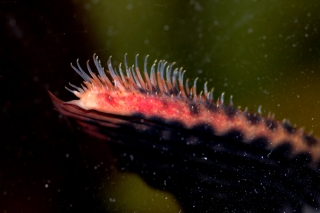 Close-up of pectoral odontodes
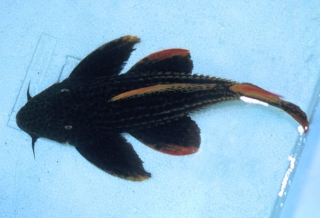 Dorsal view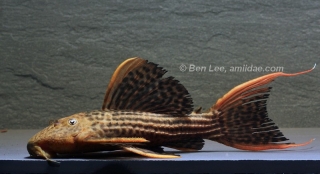
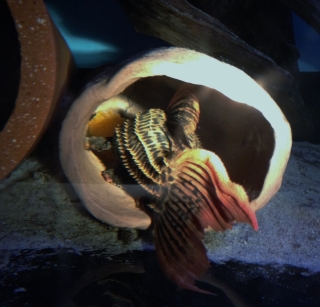 Male with eggs in cave
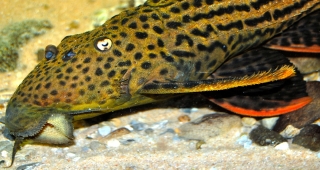 Male close-up
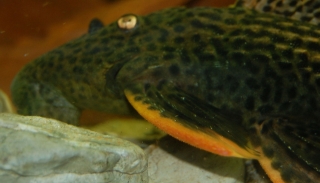 Female close-up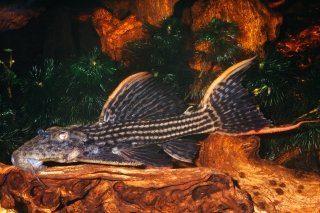
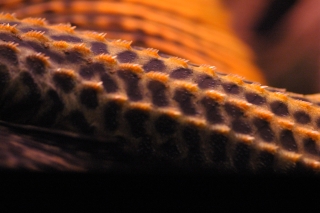 Female - close-up of body odontodes
 Video
Video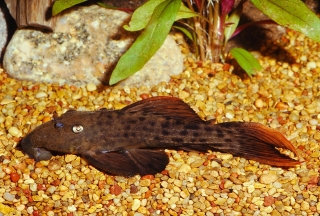
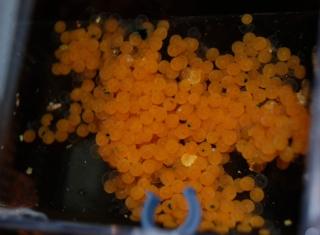 Egg clutch
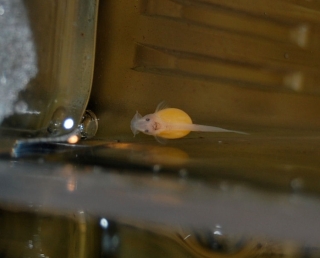 Six day old fry
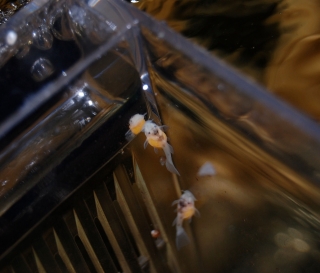 Nine day old fry
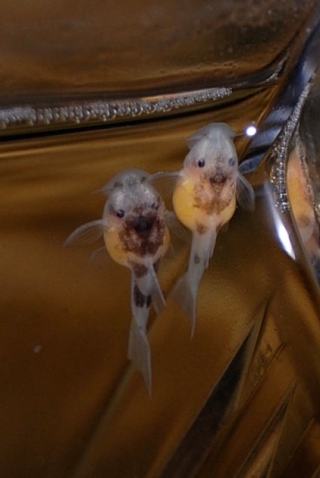 Twelve day old fry
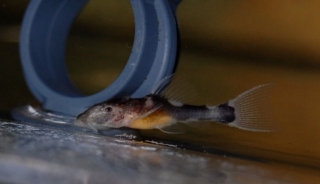 Fifeteen day old fry
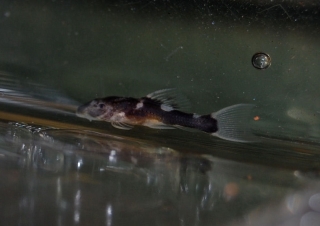 Nineteen day old fry
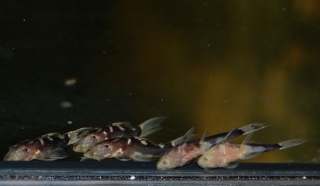 Twenty three day old fry
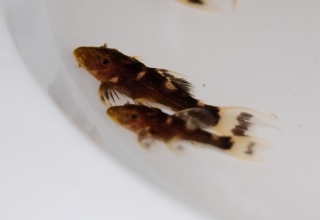 Thirty seven day old fry
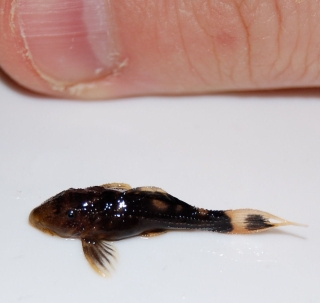 Forty five day old juvenile
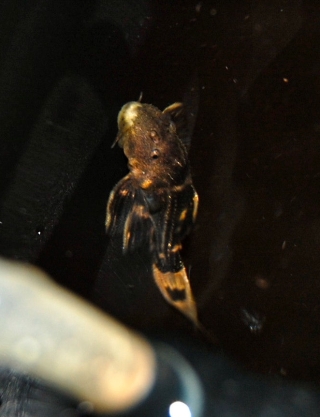 Sixty day old juvenile
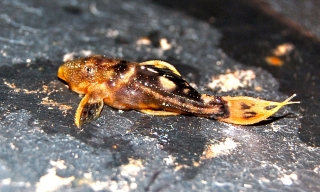 Eighty two day old juvenile
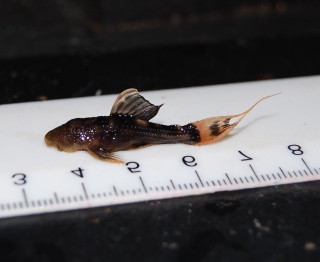 Ninety four day old juvenile
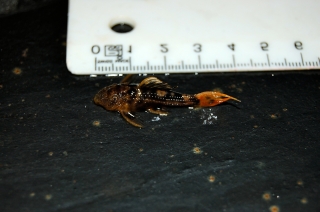 Four month old juvenile
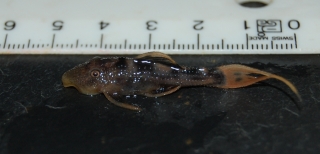 Five month old juvenile
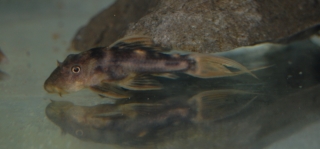 Seven month old juvenile
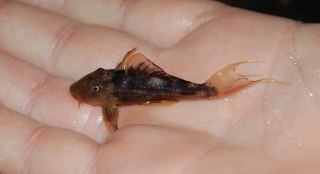 Eight months, two week old juvenile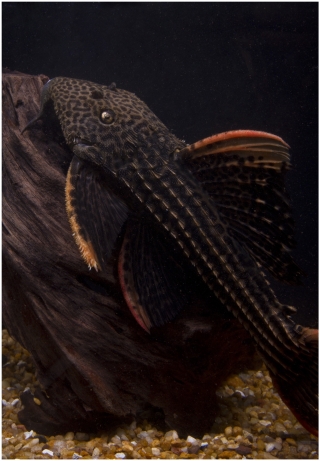
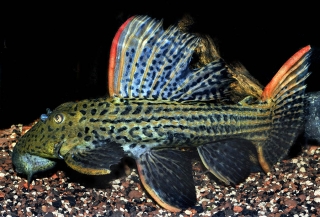
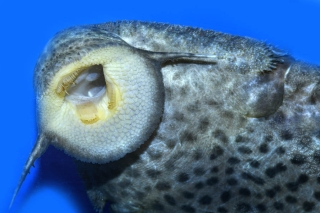 Close-up of mouth
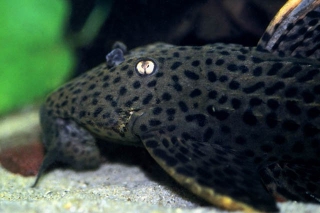 Close-up of head
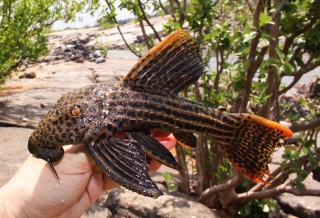 Collected at mouth of Rio Iriri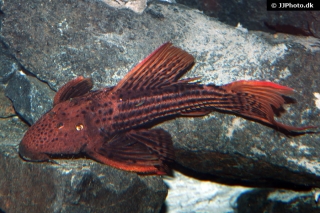
 All Fishes Data Sheet All Fishes Data Sheet | |
|---|---|
| Scientific Name | Pseudacanthicus pirarara Chamon & Sousa, 2016 |
| Common Names | L025, Scarlet Cactus Pleco Rødfinnet Kaktussugemalle (Denmark) |
| Type Locality | Rio Xingu, Senador José Porfírio, Pedral do Caitucá, Brazil, 3°34'24"S, 51°51'33"W. |
| Synonym(s) | |
| Pronunciation | SUE dah KAN thi cuss |
| Etymology | Pseud- Greek: False, Acanthicus - Greek: Spiny, Thorny. Literally "False Acanthicus" referring to this genus being similar to, yet different from, Acanthicus. Lorica, Loricare = cuirass of corslet of leather (a suit of armour made of leather). |
| Species Information | |
| Size | 450mm or 17.7" SL. Find near, nearer or same sized spp. |
| Identification | The German common name for this genus is ''Cactus Pleco''. A good name! Pseudacanthicus is a member of the Acanthicus clade. Species of the Acanthicus clade are distinguished from other Loricariidae species by the presence of (1) longitudinal rows of keels (pointed odontodes) along the body sides; (2) eight or more dorsal-fin rays (vs. six or seven in most other loricariids except Pterygoplichthys, Chaetostoma, Pogonopoma and Pseudancistrus pectegenitor); (3) seven to eight infraorbitals (vs. usually five or six); (4) five anal-fin branched rays (vs. usually four); and (5) presence of hypertrophied odontodes along the snout margin (vs. hypertrophied odontodes absent in other loricariids except Isbrueckerichthys and Pareiorhaphis, in Neoplecostominae; Panaque and Pseudancistrus and Neblinichthys, in Ancistrini; and most dimorphic males of Loricariinae). Within the Acanthicus group, Pseudacanthicus is distinguished by the presence of two small plates in the posterior area of the compound pterotic (vs. one median plate or plate absent), and by the presence of narrow premaxillae with a small number of elongate and curved teeth (except from Leporacanthicus). The German common name for this genus is ''Cactus Pleco''. A good name! Pseudacanthicus is a member of the Acanthicus clade. Species of the Acanthicus clade are distinguished from other Loricariidae species by the presence of (1) longitudinal rows of keels (pointed odontodes) along the body sides; (2) eight or more dorsal-fin rays (vs. six or seven in most other loricariids except Pterygoplichthys, Chaetostoma, Pogonopoma and Pseudancistrus pectegenitor); (3) seven to eight infraorbitals (vs. usually five or six); (4) five anal-fin branched rays (vs. usually four); and (5) presence of hypertrophied odontodes along the snout margin (vs. hypertrophied odontodes absent in other loricariids except Isbrueckerichthys and Pareiorhaphis, in Neoplecostominae; Panaque and Pseudancistrus and Neblinichthys, in Ancistrini; and most dimorphic males of Loricariinae). Within the Acanthicus group, Pseudacanthicus is distinguished by the presence of two small plates in the posterior area of the compound pterotic (vs. one median plate or plate absent), and by the presence of narrow premaxillae with a small number of elongate and curved teeth (except from Leporacanthicus). |
| Habitat Information | |
| Distribution | South America Amazon, Lower Amazon, Xingu, Lower Xingu (click on these areas to find other species found there) Amazon, Lower Amazon, Xingu, Middle Xingu (click on these areas to find other species found there) Login to view the map. |
| IUCN Red List Category | Not Evaluated |
| pH | 6.0 - 7.4 |
| Temperature | 24.0-26.0°C or 75.2-78.8°F (Show species within this range) |
| Other Parameters | Water quality is important for this fish, clear, well-oxygenated especially because of the warmer water this fish prefers. |
| Husbandry Information | |
| Feeding | Carnivore although not a predator, prawns and chopped mussel appear favorites and promote favorable growth. High quality pellet foods are well received and greatly reduces the volume of waste produced. Some vegetable should also be provided and thus balances diet. User data. |
| Furniture | Adequate coverage for this Genus is required. Multiple structures consisting of wood, caves, and overhangs are ideal. High intensity lighting does not bother them and many species will 'sun themselves' on the top of the furnishings if they are comfortable with their environment. Long sight lines can promote aggression. Placing structure at different distances from the front glass is an effective solution. |
| Suggested Tankmates | The temptation with large tough Loricariids is to keep them with other large tough fish such as Oscars or other brutish characters. This actually works quite well with most omnivorous or mainly vegetarian plecos. Pseudacanthicus despite their defensive protection can be bullied by faster moving fish of similar size. They are carnivores and only eat vegetables when their preferred food is unavailable. The amount of waste produced depends on their diet but is considerably less than a Panaque or Pterygoplichthys of similar size. |
| Breeding Reports | There is no breeding report. |
| Further Information | |
| Reference | Journal of Fish Biology v. 90 (no. 1), pp 2, Figs. 1-2. |
| Registered Keepers | There is but a single registered keeper, view all "my fish" data. |
| Wishlists | Love this species? Click the heart to add it to your wish list. There is no wish to keep this species. |
| Spotters | Spotted this species somewhere? Click the binoculars! There are 10 records of this fish being seen, view them all. |
| More Resources | |
| Forum BBCode | |
 | Look up P. pirarara on PlanetCatfish.com |
 | Look up P. pirarara on Fishbase |
 | Look up P. pirarara on Encyclopedia of Life |
 | Look up P. pirarara on Global Biodiversity Information Facility |
| LFS label creator ARN ref:1.4.40.188 | |
| Last Update | Sat Dec 25, 2010 10:17 am (Species record created: Thu Jan 01, 1970 1:00 am) |