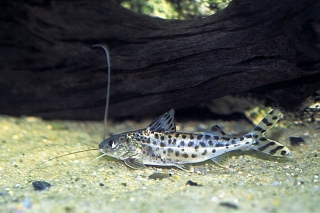
Summary of Pimelodus Summary of Pimelodus |
|---|
| New spp. / time |  | |  | | | | | | | | | | | | | 1750 | 1770 | 1790 | 1810 | 1830 | 1850 | 1870 | 1890 | 1910 | 1930 | 1950 | 1970 | 1990 | 2010 |
|
| Species | There are 39 "species" in our database. Pimelodus pictus is the most commonly kept (k: 5). Pimelodus ornatus has the most images (i: 21). |
| Keepers | 1 species (2.6%) are being kept by registered keepers |
| Pronunciation | pim ee LOW duss |
| Etymology | pimele, fat; –odes, having the form of, i.e., fatty, referring to their adipose fins (at the time, this was a catch-all genus for many catfish species, most of which possess a “fatty” or adipose fin) [note: many online references report that –odes is derived from odous, meaning teeth, but this is incorrect]. |
| Compatibility | Peaceful but will eat smaller fishes. |
| Tankmates | Larger active fish such as tetras, most barbs and gouramis. They can also be kept in groups but do not suffer from being kept singly. Angelfish and other ''graceful'' fish are sometimes bothered by this species' barbels particularly during "lights-out". |
| Breeding | Unreported in the aquarium. |
| Size | Smallest 66 mm, largest 570 mm, average 225mm, most commonly 250mm. All SL. |
| Distribution |
Login to view the map. |
| Genus Thumbnails |
|---|
|
| Most Kept Species |
|---|
| 1. | (100%) |