
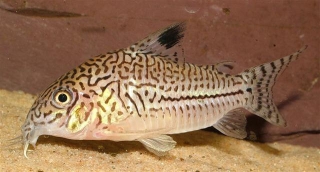
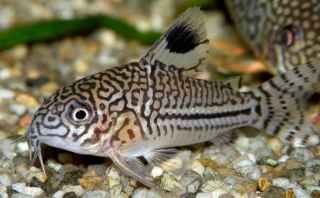
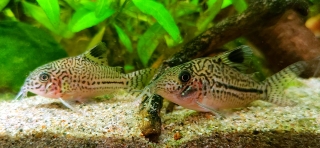
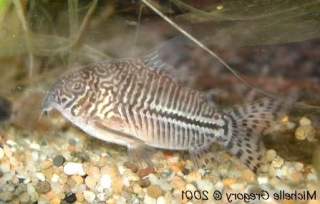
 C. trilineatus (left) and C102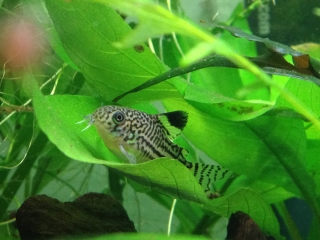
 Missing an eye!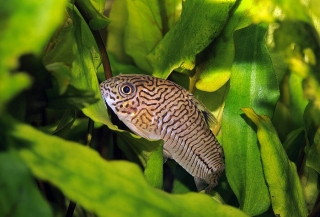
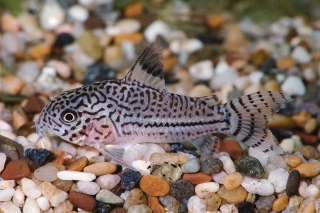
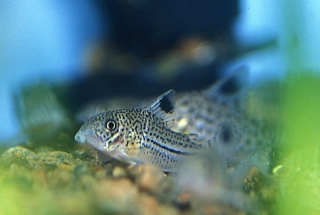 Barbel loss due to incorrect care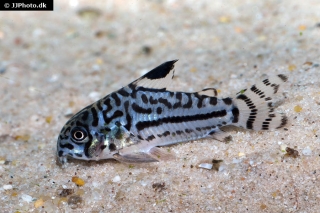
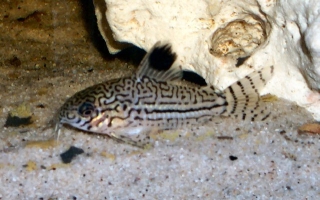 Collected in Peruvian Amazon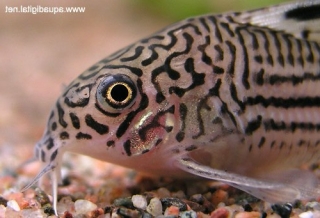
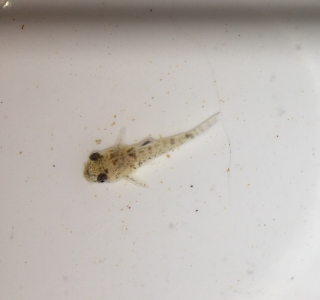 Six week old juvenile
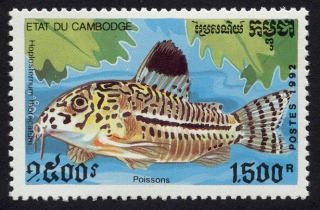 Stamp
Stamp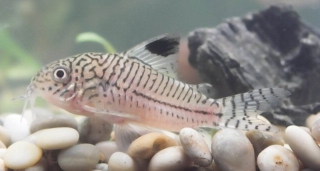
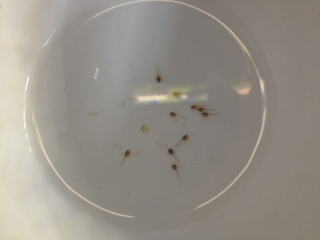 Fry
Fry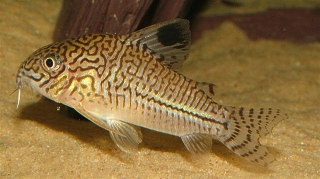
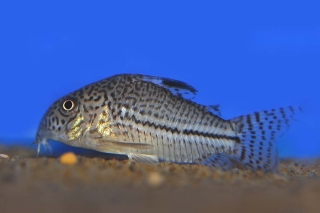
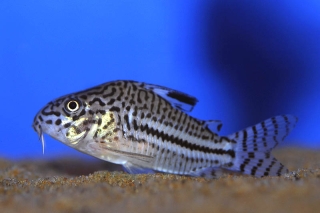
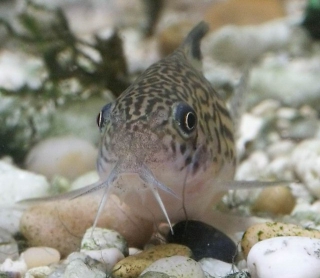
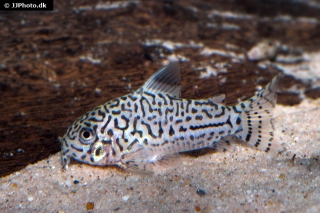
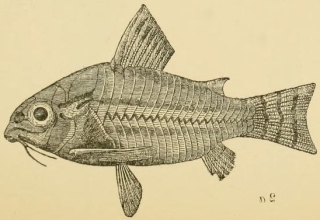
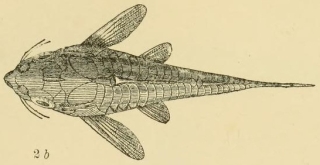 Dorsal view
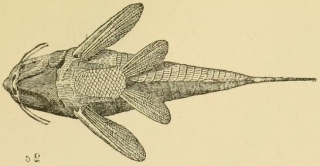 Ventral view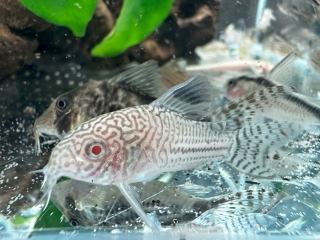
 All Fishes Data Sheet All Fishes Data Sheet | |
|---|---|
| Scientific Name | Hoplisoma trilineatum (Cope, 1872) |
| Common Names | Three Line Cory Leopard Cory, Panzerwels (Germany), Three Stripe Cory, Trestribet Pansermalle (Denmark) |
| Type Locality | Tributary of Río Ambyiacu, Peru. |
| Synonym(s) | Corydoras dubius, Corydoras episcopi, Corydoras trilineatus |
| Pronunciation | hop lee so mah |
| Etymology | Named after the genus Callichthys, which refers to the armour plates (Callum = hard skin; ichthys = fish) found in all members of this family. |
| Species Information | |
| Size | 61mm or 2.4" SL. Find near, nearer or same sized spp. |
| Sexing | Females grow larger and are more full-bodied, this is best observed from above the fish. Males will typically have more pointed as opposed to more rounded fin tips as they mature. Females grow larger and are more full-bodied, this is best observed from above the fish. Males will typically have more pointed as opposed to more rounded fin tips as they mature. |
| Habitat Information | |
| Distribution | South America Amazon, Upper Amazon, Marañón, Ucayali (click on these areas to find other species found there) Amazon, Upper Amazon, Ampiyacu (click on these areas to find other species found there) Amazon, Upper Amazon, Marañón, Pastaza (click on these areas to find other species found there) Amazon, Middle Amazon (Solimoes), Purus, Macapá (click on these areas to find other species found there) Login to view the map. |
| IUCN Red List Category | Not Evaluated |
| pH | 5.8 - 7.2 |
| Temperature | 16.0-25.0°C or 60.8-77°F (Show species within this range) |
| Other Parameters | A hardy species that will tolerate most water conditions found within a reasonably maintained aquarium. |
| Husbandry Information | |
| Feeding | Will readily accepted all prepared foods that reach the bottom of the aquarium such as tablets, granules and larger flakes. Live (or frozen) foods such as bloodworm, white worm, grindal worm (Enchytraeus), Daphnia and Tubifex are readily accepted and good for conditioning groups of fishes for spawning. User data. |
| Furniture | Ideally, and close to mandatory, substrate should be sand, but rounded gravel is an imperfect alternative. Avoid keeping over rough edged (chipped) gravel or sharp sand. This will increase the risk of damage to the fishes barbels when it tries to dig. Substrate should be bordered with driftwood and aquatic plants leaving an open area for them to search for food and swim. The shade provided by overhanging rock work, arching bogwood, tall or floating plants are all that is required to settle a group of these fishes. |
| Compatibility | A peaceful, shoaling, community fish. |
| Breeding Reports | There is no breeding report. |
| Further Information | |
| Reference | Proceedings of the Academy of Natural Sciences of Philadelphia v. 23, pp 281, Pl. 6 (figs. 2a-c). |
| Registered Keepers | There are 3 registered keepers, view all "my fish" data. |
| Wishlists | Love this species? Click the heart to add it to your wish list. There is no wish to keep this species. |
| Spotters | Spotted this species somewhere? Click the binoculars! There are 11 records of this fish being seen, view them all. |
| More Resources | |
| Forum BBCode | |
 | Look up H. trilineatum on PlanetCatfish.com |
 | Look up H. trilineatum on Fishbase |
 | Look up H. trilineatum on Encyclopedia of Life |
 | Look up H. trilineatum on Global Biodiversity Information Facility |
| LFS label creator ARN ref:1.1.1580.508 | |
| Last Update | Fri Nov 04, 2022 10:03 am (Species record created: Thu Jan 01, 1970 1:00 am) |