
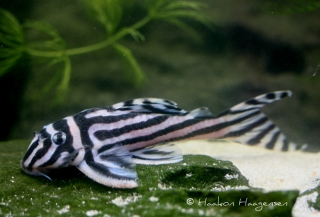
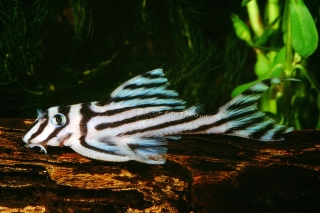
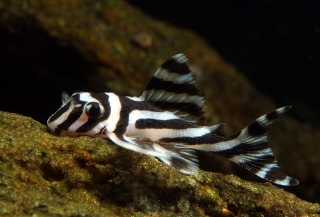
 Juvenile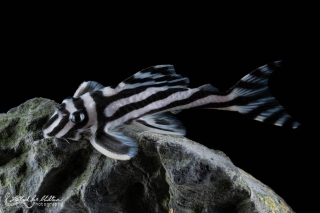
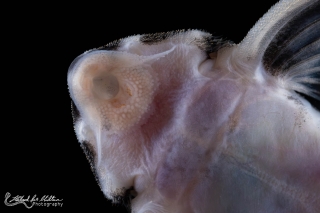
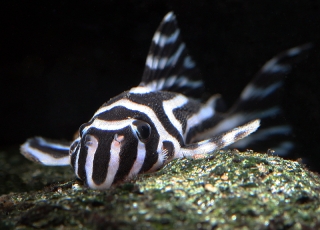
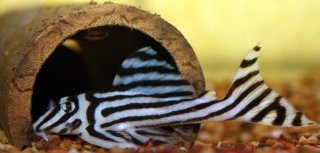
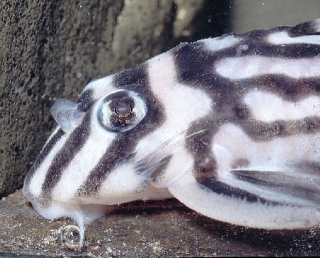
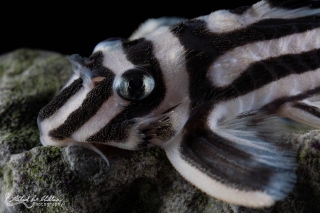 Close-up of head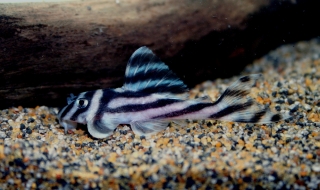
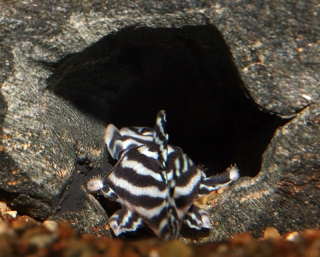 Pair in spawning cave
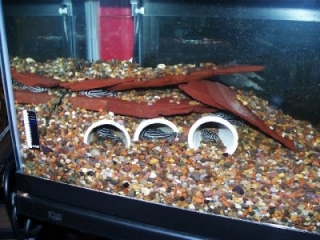 Spawning tank set-up
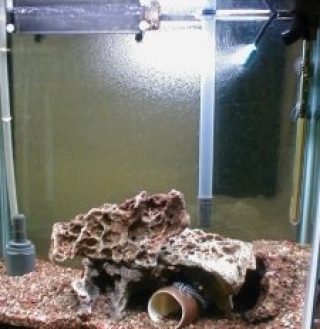 Spawning tank set-up
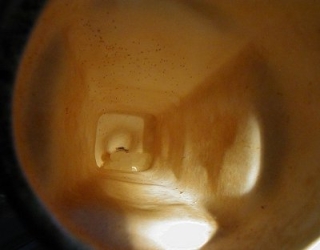 Egg clutch at far end of breeding cave
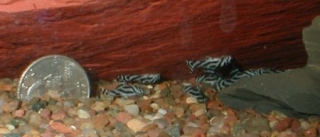 Captive bred infants
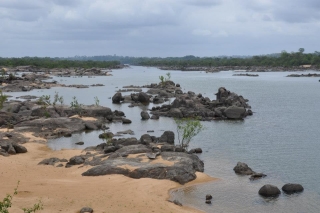 Habitat: Rio Xingu, Brazil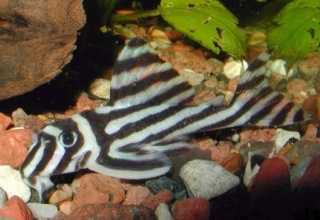
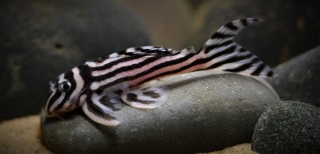
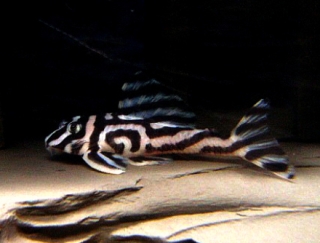 Atypical patterning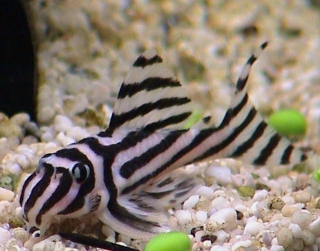
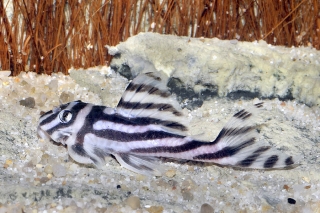
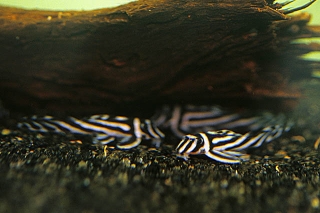 Group
Group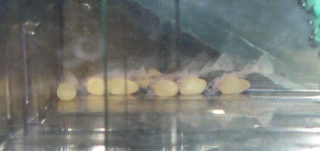 Male guarding egg clutch (right)
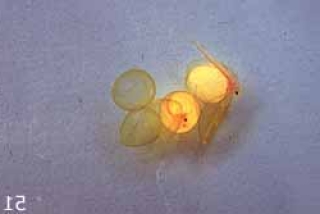 Eggs hatching
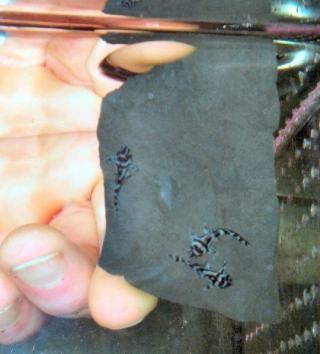 Juveniles
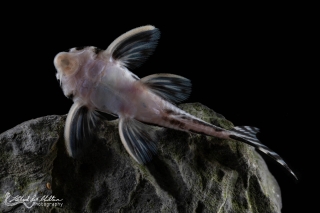 Ventral view
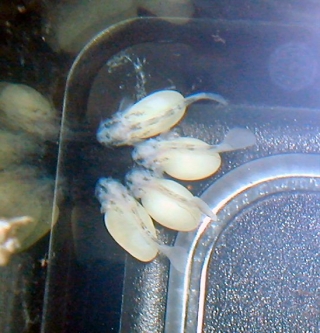 Three day old fry
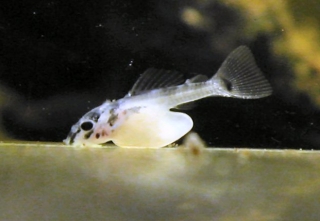 Eight day old fry
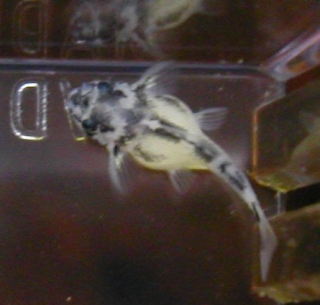 Dorsal view - nine day old fry
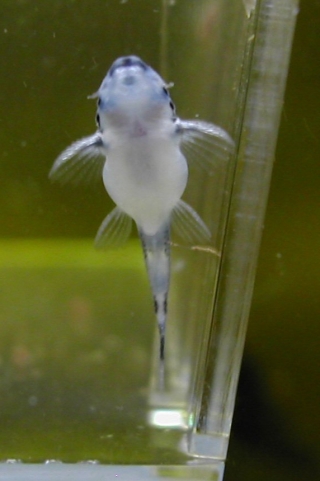 Ventral view - ten day old fry
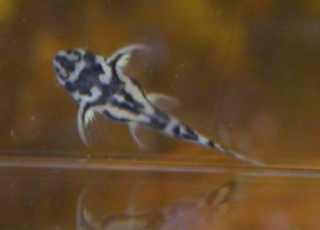 Dorsal view - eleven day old fry
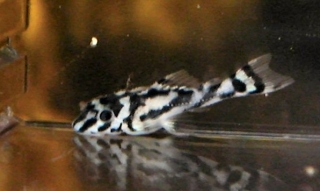 twelve day old fry
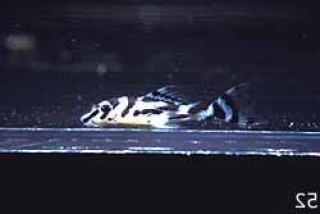 Fry
Fry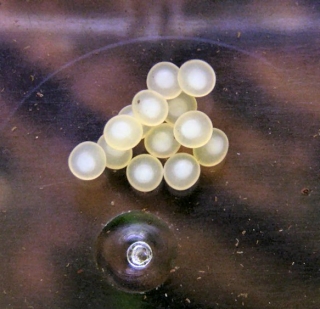 One hour old eggs
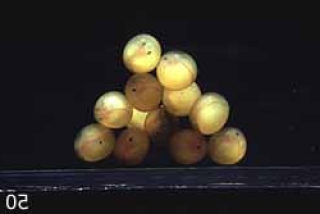 Six day old eggs
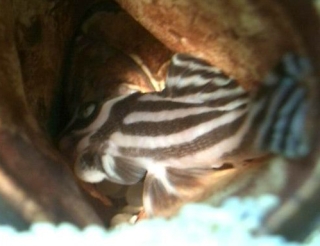 Male guarding eggs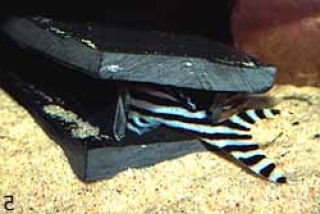
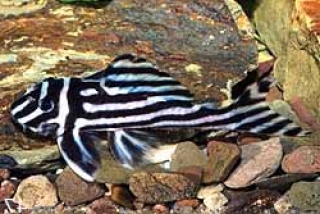
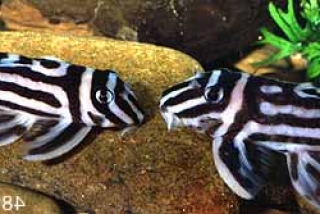
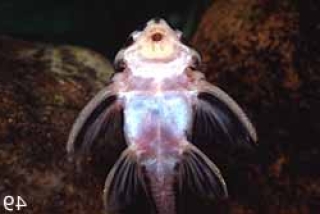
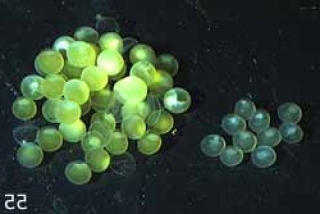 Eggs of L066(right) and L046
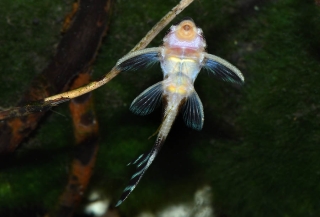 Ventral view
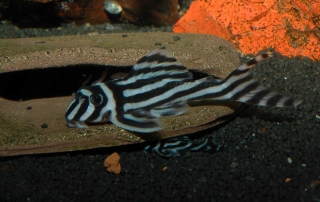 Father and son
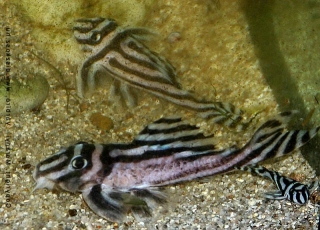 Male scarred by fighting
 Video
Video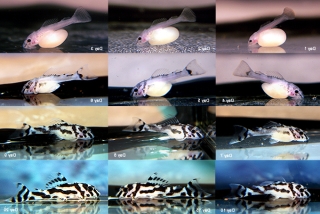 Fry development
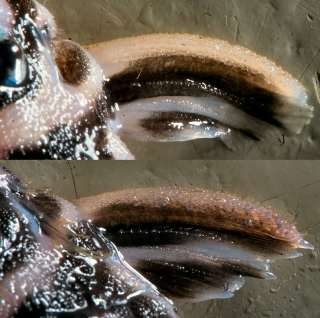
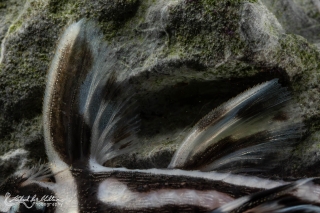 Close-up of pectoral fin
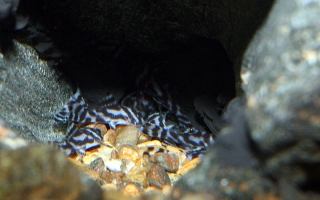 Twenty five day old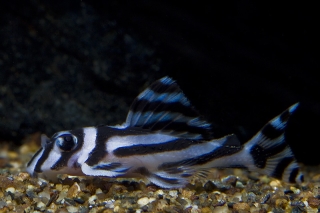
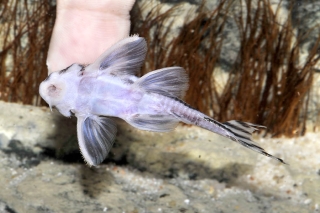 Ventral view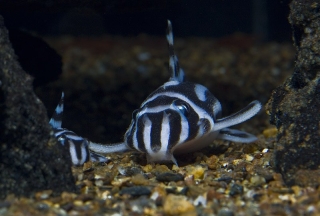
 Pair - female top
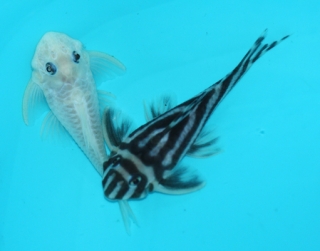 Leucistic and normal coloured
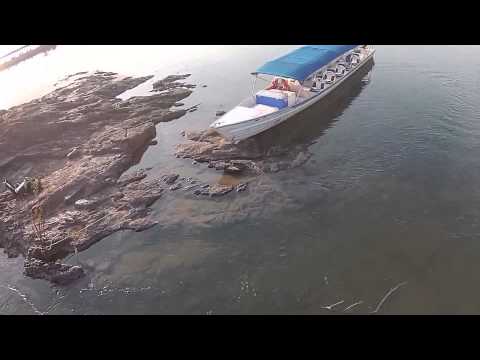 Video: Air Xingu
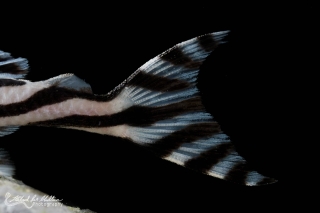 Close-up of caudal fin
 All Fishes Data Sheet All Fishes Data Sheet | |
|---|---|
| Scientific Name | Hypancistrus zebra Isbrücker & Nijssen, 1991 |
| Common Names | L046, Zebra Pleco L098, Blåfinnet Zebrasugemalle (Denmark), Imperial Pleco, Zebra-sugemalle (Denmark), Zebrawels (Germany) |
| Type Locality | About 1 hr. upstream of Altamira by speedboat, anastomoses of Rio Xingú, Pará State, Brazil. |
| Synonym(s) | |
| Pronunciation | hype an siss truss |
| Etymology | A contraction of the Greek hypo (meaning less than) and ancistrus, an allusion to the reduced number of teeth (particularly in the lower jaw) found in this genus. Lorica, Loricare = cuirass of corslet of leather (a suit of armour made of leather). |
| Species Information | |
| Size | 75mm or 3" SL. Find near, nearer or same sized spp. |
| Sexing | Mature males have thicker first pectoral ray, more pronounced odontodes on the first pectoral fin ray and odontodes on the cheeks and/or rear of the body, and typically a wider head. Mature females are wider around the middle of the body, and much less noticeable body and fin odontodes. Mature males have thicker first pectoral ray, more pronounced odontodes on the first pectoral fin ray and odontodes on the cheeks and/or rear of the body, and typically a wider head. Mature females are wider around the middle of the body, and much less noticeable body and fin odontodes. |
| Habitat Information | |
| Distribution | South America Amazon, Lower Amazon, Xingu, Lower Xingu (click on these areas to find other species found there) Amazon, Lower Amazon, Xingu, Middle Xingu (click on these areas to find other species found there) Amazon, Lower Amazon, Xingu, Lower Xingu (click on these areas to find other species found there) Login to view the map. |
| IUCN Red List Category | Critically Endangered , a distribution map is available on the IUCN species page. Last assessed 2018. |
| pH | 6.0 - 7.5 |
| Temperature | 26.0-30.0°C or 78.8-86°F (Show species within this range) |
| Other Parameters | The water chemistry of the Rio Xingú is well documented, but it is not that important as H. zebra seems to do well in just about any water provided it is high in oxygen content and warm. pH and DH do not seem to matter since the fish has been spawned in all types of water, even water that was hard and alkaline. To best replicate their natural habitat the water would be neutral to slightly acidic and soft. |
| Husbandry Information | |
| Feeding | Unlike the popular opinion of many other loricariids, Hypancistrus are more carnivores than algae eaters. This is backed up by a small and lightly toothed mouth that indicates they are poor algae scrapers. Provide small and frequent supply of mainly meaty foods such as dry discus food, bloodworm and even brineshrimp with the infrequent offering of flake or algae tablets. User data. |
| Furniture | Sand, primarily rocks and optionally driftwood. Caves made out of slate plates, bamboo or PVC pipe. |
| Compatibility | Suitable with most fish, as long as they are not too large or territorial about bottom-space. |
| Suggested Tankmates | Small tetras and other similar small fish. Also Corydoras. Care has to be taken to ensure that they get enough food, as they can be a bit shy and slow to grab food when available. |
| Breeding | All Hypancistrus are closed cave spawners. Males trap females in the cave, eggs are laid and fertilised after which the male guards them until the fry are free swimming. |
| Breeding Reports | There are 2 breeding reports, read them all here. |
| Further Information | |
| Reference | Ichthyological Exploration of Freshwaters v. 1 (no. 4), pp 348, Figs. 1-2. |
| Registered Keepers | There are 2 registered keepers, view all "my fish" data. |
| Wishlists | Love this species? Click the heart to add it to your wish list. There is no wish to keep this species. |
| Spotters | Spotted this species somewhere? Click the binoculars! There are 13 records of this fish being seen, view them all. |
| More Resources | |
| Forum BBCode | |
 | Look up H. zebra on PlanetCatfish.com |
 | Look up H. zebra on Fishbase |
 | Look up H. zebra on Encyclopedia of Life |
 | Look up H. zebra on Global Biodiversity Information Facility |
| LFS label creator ARN ref:1.4.7.168 | |
| Last Update | Sat Dec 25, 2010 10:17 am (Species record created: Thu Jan 01, 1970 1:00 am) |