
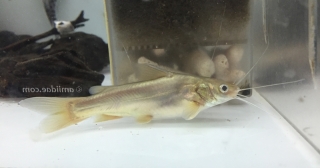
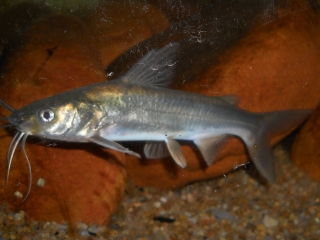
 Brackish stream near Pulicat Lake, Madras
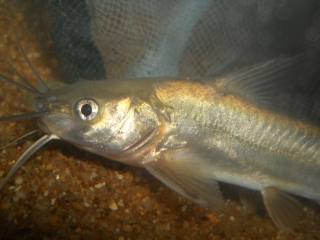 Brackish stream near Pulicat Lake, Madras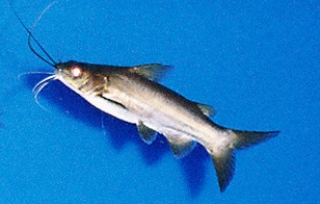
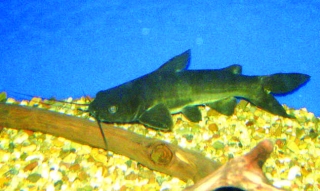
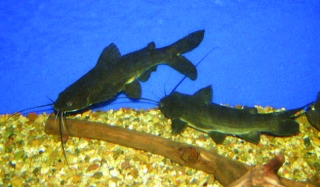 Pair
Pair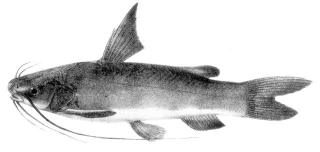
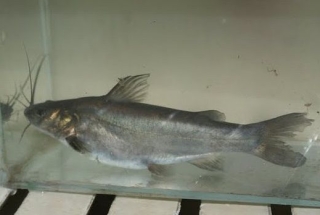 Brackish stream near Pulicat Lake, Madras
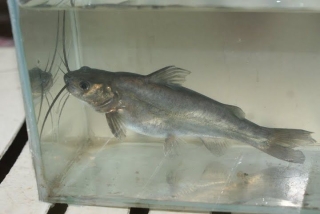 Brackish stream near Pulicat Lake, Madras
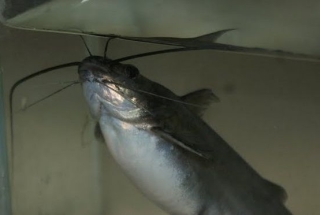 Brackish stream near Pulicat Lake, Madras
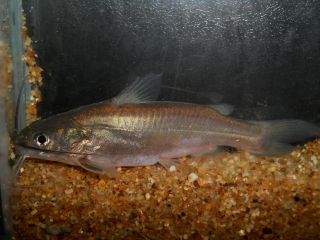 Juvenile from south India
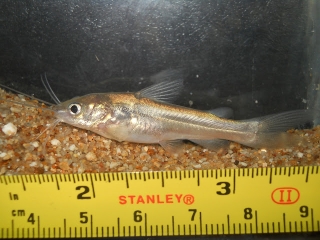 Gangetic estuary,West Bengal (Type Locality).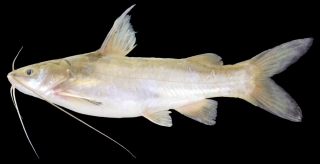
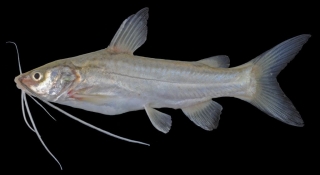
 All Fishes Data Sheet All Fishes Data Sheet | |
|---|---|
| Scientific Name | Mystus gulio (Hamilton, 1822) |
| Common Names | Long Whiskers Catfish Langskægget Pigmalle (Denmark) |
| Type Locality | Higher parts of Gangetic estuaries. |
| Synonym(s) | Aoria gulio, Aspidobagrus gulio, Bagrus albilabris, Bagrus albilabrus, Bagrus gulio, Bagrus schlegelii, Macrones gulio, Pimelodus gulio, Pseudobagrus gulio |
| Pronunciation | miss tuss |
| Etymology | The generic name is probably derived from the Latin mystax, meaning moustache, in reference to the long barbels. It was first used by Scopoli in 1777 making it a very old genus that has included many catfishes from throughout the world at one time or another. Named after the genus, Bagrus, which refers to the Arabic name of a fish. |
| Species Information | |
| Size | 460mm or 18.1" SL. Find near, nearer or same sized spp. |
| Identification | Fishes of the genus Mystus Scopoli are small to medium-sized bagrid catfishes occurring in South Asia. Roberts (1994) recognized Mystus to have an elongate cranial fontanel reaching up to the base of the occipital process, long maxillary barbel, very long adipose fin, 11–30 gill rakers on the first gill arch and 37–46 total vertebrae, about equally divided between abdominal and caudal regions. He included only eight species under the genus. Mo (1991) characterized the genus to have a thin needle-like first infraorbital, twisted and thickened metapterygoid loosely attached to the quadrate by means of ligament or a small extent of cartilage. Jayaram & Sanyal (2003) and Ferraris (2007) respectively listed 44 and 33 species of Mystus as valid. Fishes of the genus Mystus Scopoli are small to medium-sized bagrid catfishes occurring in South Asia. Roberts (1994) recognized Mystus to have an elongate cranial fontanel reaching up to the base of the occipital process, long maxillary barbel, very long adipose fin, 11–30 gill rakers on the first gill arch and 37–46 total vertebrae, about equally divided between abdominal and caudal regions. He included only eight species under the genus. Mo (1991) characterized the genus to have a thin needle-like first infraorbital, twisted and thickened metapterygoid loosely attached to the quadrate by means of ligament or a small extent of cartilage. Jayaram & Sanyal (2003) and Ferraris (2007) respectively listed 44 and 33 species of Mystus as valid. |
| Habitat Information | |
| Distribution | Primarily Asia but a handful of species in Africa. Indian waters (click on these areas to find other species found there) Login to view the map. |
| IUCN Red List Category | Least Concern , a distribution map is available on the IUCN species page. Last assessed 2019. |
| pH | 6.0 - 7.8 |
| Temperature | 20.0-27.0°C or 68-80.6°F (Show species within this range) |
| Other Parameters | Prefers brackish water. |
| Husbandry Information | |
| Feeding | Easily adapts to a wide variety of frozen and prepared food in the aquarium. May eat very small fish. User data. |
| Breeding Reports | There is no breeding report. |
| Further Information | |
| Reference | An account of the fishes found in the river Ganges, pp 201, 379, Pl. 23 (fig. 66). |
| Wishlists | Love this species? Click the heart to add it to your wish list. There is no wish to keep this species. |
| Spotters | Spotted this species somewhere? Click the binoculars! There are 3 records of this fish being seen, view them all. |
| More Resources | |
| Forum BBCode | |
 | Look up M. gulio on PlanetCatfish.com |
 | Look up M. gulio on Fishbase |
 | Look up M. gulio on Encyclopedia of Life |
 | Look up M. gulio on Global Biodiversity Information Facility |
| LFS label creator ARN ref:1.8.14.450 | |
| Last Update | Thu Nov 03, 2022 9:26 pm (Species record created: Thu Jan 01, 1970 1:00 am) |