
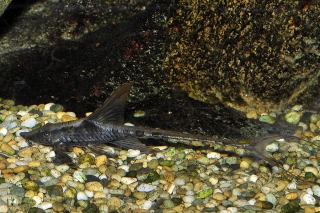
 Male guarding eggs on aquarium glass
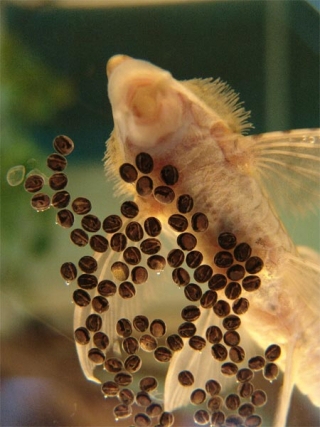
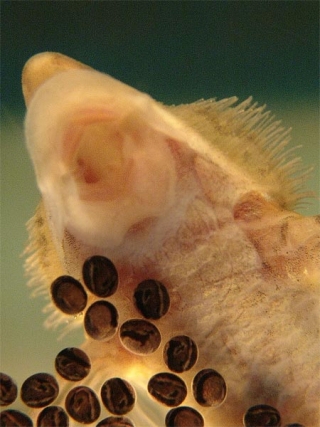 Close-up of male guarding eggs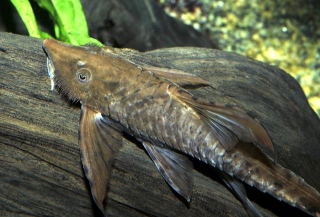
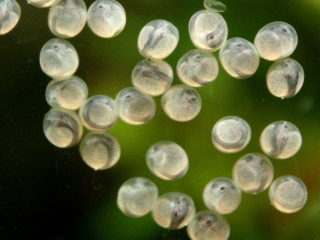 Eggs on day 5
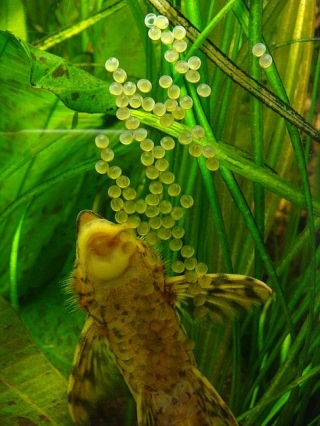 Male guarding eggs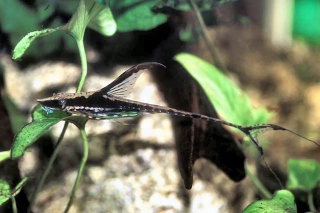
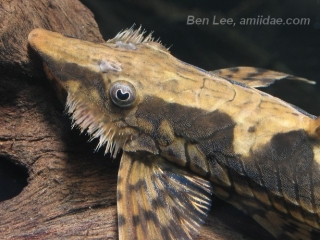 Dorsal view of male's bristles
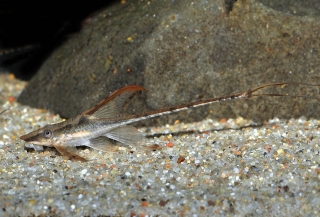
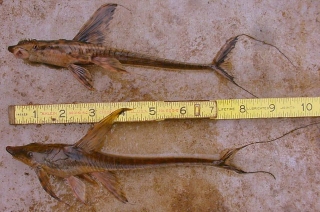 Pair - female below
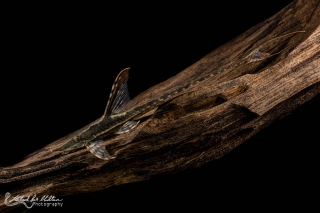
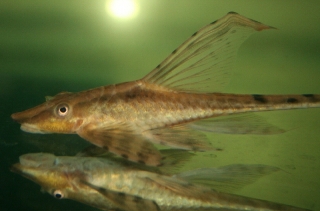
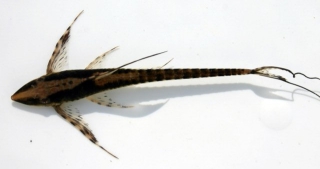 Dorsal view
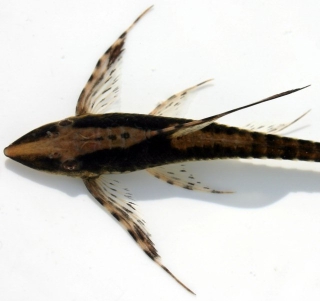 Close-up dorsal view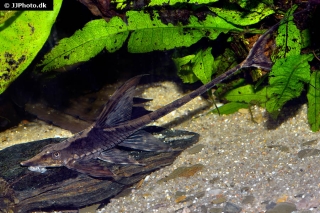
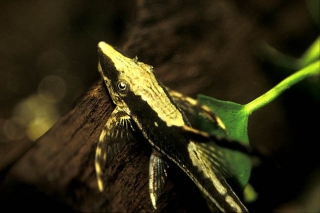
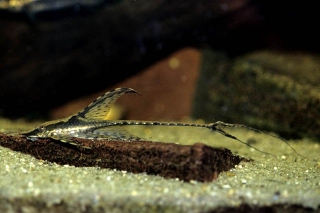
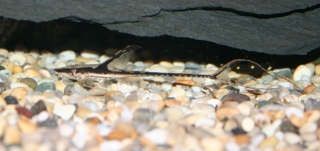 Juvenile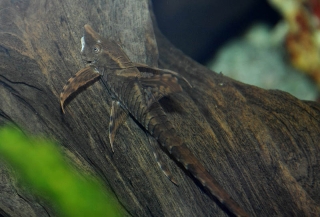
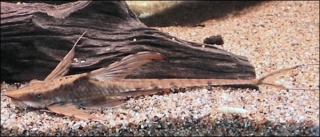
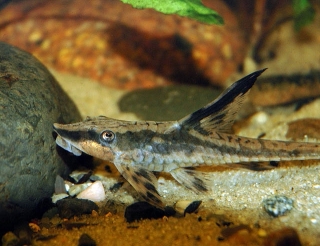 Male
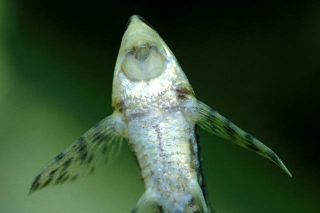
Male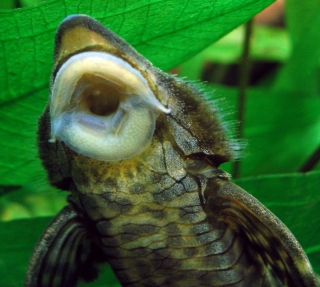 Ventral view of male's bristles
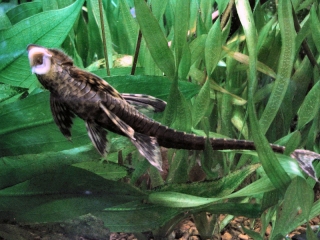 Ventral view of male
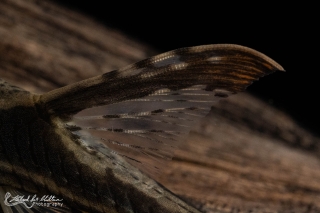 Close-up of dorsal fin
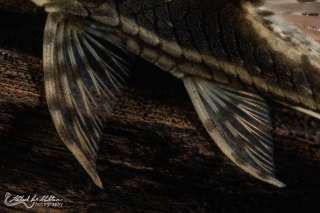 Close-up of pectoral fin
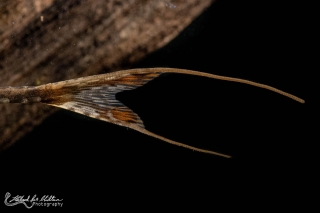 Close-up of caudal fin
 All Fishes Data Sheet All Fishes Data Sheet | |
|---|---|
| Scientific Name | Sturisomatichthys reinae Londoño-Burbano & Reis, 2019 |
| Common Name | Royal Twig Catfish |
| Type Locality | Boca de Pepé, one of the various tributaries and river close to village, Baudó River basin, Chocó department, Colombia, 5°03'04"N, 77°3'00"W [corrected]. |
| Synonym(s) | |
| Etymology | (German)Sturio=Sturgeon + (Greek) soma=body + (Greek) -ichthys=fish. Lorica, Loricare = cuirass of corslet of leather (a suit of armour made of leather). |
| Species Information | |
| Identification | Sturisoma and Sturisomatichthys can be difficult to tell apart. Older descriptions of the genera emphasized the length of the snout (elongated in Sturisoma), but this trait is not reliable across species. Recent analyses allow discrimination based on the abdominal plates, fin colors and lateral plates: Sturisoma has its central abdominal plates arranged in three clearly-defined longitudinal series; all fins (except sometimes pectoral fins) lack dark spots; and 20–21 lateral plates in median series. Sturisomatichthys has its central abdominal plates less organized, not arranged in clearly-defined longitudinal series; dark spots usually present on one or more of the dorsal-, pectoral-, pelvic, or anal-fins; and 15–18 lateral plates in median series. Furthermore, to date all Sturisoma are cis-Andean; most (but not all) Sturisomatichthys are trans-Andean. Sturisoma and Sturisomatichthys can be difficult to tell apart. Older descriptions of the genera emphasized the length of the snout (elongated in Sturisoma), but this trait is not reliable across species. Recent analyses allow discrimination based on the abdominal plates, fin colors and lateral plates: Sturisoma has its central abdominal plates arranged in three clearly-defined longitudinal series; all fins (except sometimes pectoral fins) lack dark spots; and 20–21 lateral plates in median series. Sturisomatichthys has its central abdominal plates less organized, not arranged in clearly-defined longitudinal series; dark spots usually present on one or more of the dorsal-, pectoral-, pelvic, or anal-fins; and 15–18 lateral plates in median series. Furthermore, to date all Sturisoma are cis-Andean; most (but not all) Sturisomatichthys are trans-Andean. |
| Habitat Information | |
| Distribution | South America Colombia Pacific Rivers, Baudó (click on these areas to find other species found there) Login to view the map. |
| IUCN Red List Category | Not Evaluated |
| Husbandry Information | |
| Breeding Reports | There is no breeding report. |
| Further Information | |
| Reference | Copeia v. 107 (no. 4), pp 795, Fig. 16. |
| Wishlists | Love this species? Click the heart to add it to your wish list. There is no wish to keep this species. |
| Spotters | Spotted this species somewhere? Click the binoculars! There are 10 records of this fish being seen, view them all. |
| More Resources | |
| Forum BBCode | |
 | Look up S. reinae on PlanetCatfish.com |
 | Look up S. reinae on Fishbase |
 | Look up S. reinae on Encyclopedia of Life |
 | Look up S. reinae on Global Biodiversity Information Facility |
| LFS label creator ARN ref:1.4.48.1933 | |
| Last Update | Sat Dec 25, 2010 10:17 am (Species record created: Thu Jan 01, 1970 1:00 am) |